



If the question "What materials to incorporate in for your new interior?" is relevant to you, do not miss this article.
1 When creating any interior, we are faced with dozens of decisions until its completion. Many of these are somewhat trivial and only affect the final product's appearance. However, some choices are much more important, as they can impact the owners and their lifestyle for a considerable period of time. We often take for granted that the environment we inhabit exists only to serve us, and to a great extent, this is true. But sometimes, a particular decision puts us in a situation where we serve the environment more often than we would like to.
When creating any interior, we are faced with dozens of decisions until its completion. Many of these are somewhat trivial and only affect the final product’s appearance. However, some choices are much more important, as they can impact the owners and their lifestyle for a considerable period of time. We often take for granted that the environment we inhabit exists only to serve us, and to a great extent, this is true. But sometimes, a particular decision puts us in a situation where we serve the environment more often than we would like to.
Natural or artificial stone?
Whether you are tiling a bathroom, installing kitchen countertops and backsplashes, commenting on furniture tops or window sills, or incorporating stone in other interior design applications, the possibilities are numerous – from flooring to decorative accents on furniture handles. With a rich market of choices available, it’s wise to familiarize yourself with the basic characteristics of each option before making a decision:
Natural Stone
The natural stone that has been used since ancient times is a great solution, as long as we apply it properly and provide it with the necessary maintenance. In this article, we will only examine the two most commonly used stones - marble and granite. Travertine, slate, sandstone, and schist stones are also used for interior elements, but to a lesser extent. Marble - always a symbol of luxury and class, polished marble is undoubtedly quite beautiful. Every laid stone is unique, and you can rightfully say that there is simply no other like yours elsewhere. There is a rich selection of colors and patterns, from very dynamic to completely monochromatic. The finishes also vary, with standard options being polished and honed, but they can also be antiqued or bush-hammered. While polished stone has a slightly wet effect (and is quite slippery when wet), the other finishes make it coarser.
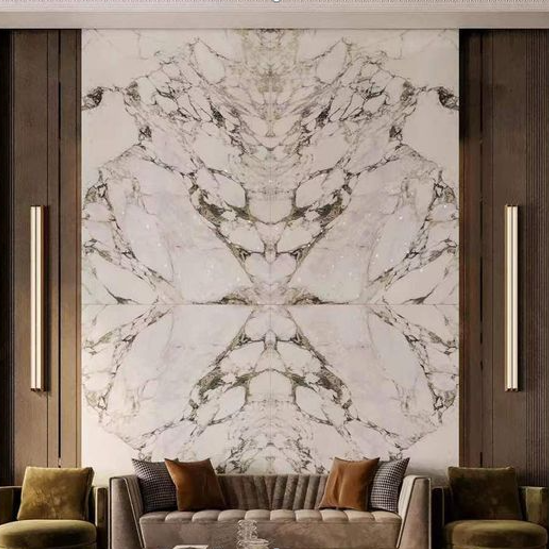
The downsides of marble are no less important than the upsides. Although its price per square meter is usually not dramatically higher than that of artificial alternatives, its installation is quite expensive (the stone comes cut to 2 cm thick slabs, which makes it much heavier than 8 mm composite alternative). Installing natural stone is also riskier because the veins in the slabs can easily break if not handled properly. The aesthetic sense of the stonemason is essential, especially when there is no design for cutting the slabs and laying the panels. The perfect effect of marble is achieved when the veins from tile to tile transition as smoothly as possible and create a sense of greater continuous area. An effect that is achieved only with considerable effort in execution.
Marble is quite hygroscopic – it absorbs liquids, from which stains easily remain, which then irritate the eye. Most cleaning products can also damage the marble, with only a small portion of specialized formulas having no negative impact.
Granite is much more durable than marble, both in terms of scratching and impact resistance, as well as temperature fluctuations. It is not as hygroscopic and is more difficult to stain. For the same reason, it is also easier to clean. The finishes of granite are identical to those of marble, and when the surface is polished, it becomes quite slippery. The main colors range are from gray to black, but there are also rare colored granites in green, red, and blue. However, its pattern is quite subtle and homogeneous. As with other stones, care should be taken when cleaning granite with cleaning agents. We recommend using those with a neutral pH.
In summary, we highly recommend natural stone, but only to those who are willing to devote resources (time and money) to its maintenance. Maintenance mainly involves impregnation, and occasionally polishing. Usually, slabs arrive from the factory already impregnated or are impregnated on site. However, the impregnator wears out over time, mainly during cleaning. Therefore, depending on the application of the stone and its intensity of use (sometimes even once a year), marble should be impregnated. We recommend the Bellinzoni products.
Polishing is required when the stone has suffered serious damage, in the form of deep stains or scratches. First, a part of the upper layer of the stone is removed by grinding, and then everything is polished.
Artificial stone
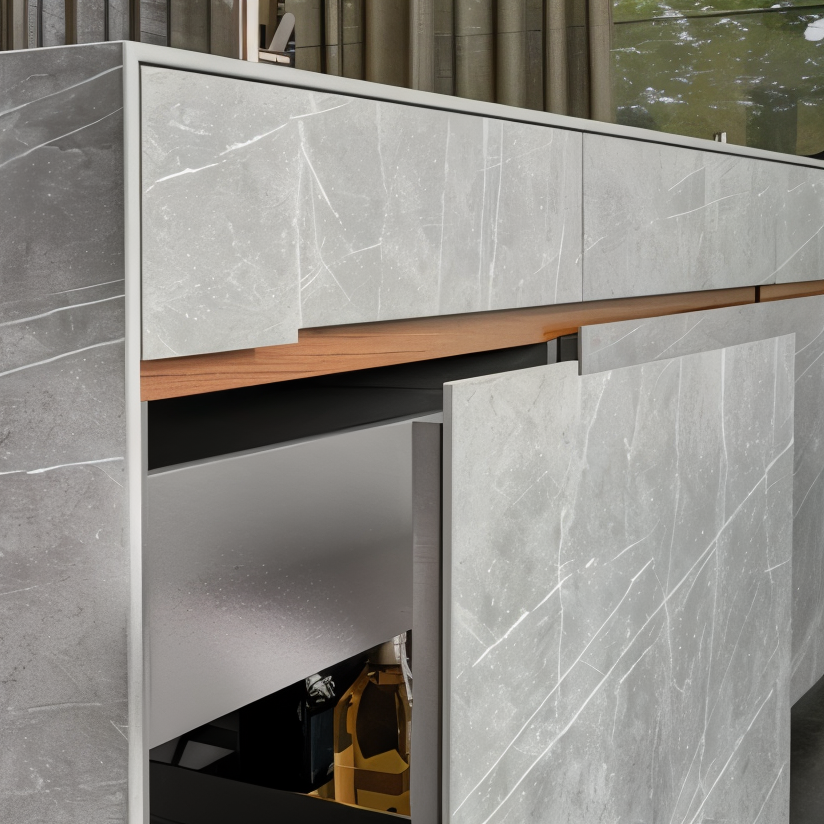
1Artificial stone can take many forms, ranging from composites (such as so-called technical stone, which consists of 95% natural stone and 5% polyester resin) to printed porcelain tiles. Technical stone is generally more expensive than porcelain tiles, but it offers better quality and aesthetics, and is produced in larger slabs, providing greater freedom for optimizing cutting and sizing.
However, in recent years, the market has offered a range of high-quality large-format porcelain tiles with unique patterns, making it appropriate to consider both materials under the same general category. The only notable difference is that many technical stones are colored throughout their depth, allowing for different types of bevels and edges on corners (primarily used in creating returns and external corners), whereas porcelain tiles typically require a trim to hide the cut edge.
In terms of appearance, artificial stone has come very close to mimicking nature, but not quite 100%. Natural stone always offers more nuances and imperfections (which are actually features, since perfectly smooth surfaces are perceived as unnatural by the subconscious and carry an artificial taste). Nonetheless, to be fair, there are outstanding prints on artificial stone that even specialists find difficult to distinguish from natural stone. Additionally, there are series of artificial stone products created by human imagination that have no equivalent in nature, yet they are incredibly beautiful and impactful. In reality, the choice of decors on artificial stone is greater.
Artificial stone is also characterized by easier installation, as it can be ordered with a thickness of even 6mm, or sometimes 3mm. If you need to replace a tile, the risk of leaving a patch is much lower, as you can simply order a tile from the same series (if still in production), whereas natural stone, even from the same quarry, can vary. Technical stone is much more resistant to everything, from impacts to chemicals to scratching, is resistant to temperature fluctuations, and best of all, it requires no maintenance or special care in cleaning.
This solution is not optimal for people who prefer to be surrounded by 100% natural materials or who believe that stones have their own vibration, specific energy, and identity. However, for those who value functionality, durability, and low maintains, artificial stone can be an excellent choice.
Solid wood, MDF or Particleboard?
When it comes to choosing materials for furniture, especially for kitchens and other built-in pieces, the question of what wood to use inevitably arises. In this discussion, we’ll be exploring the three main options, though there are certainly more options provided by the furniture industry.
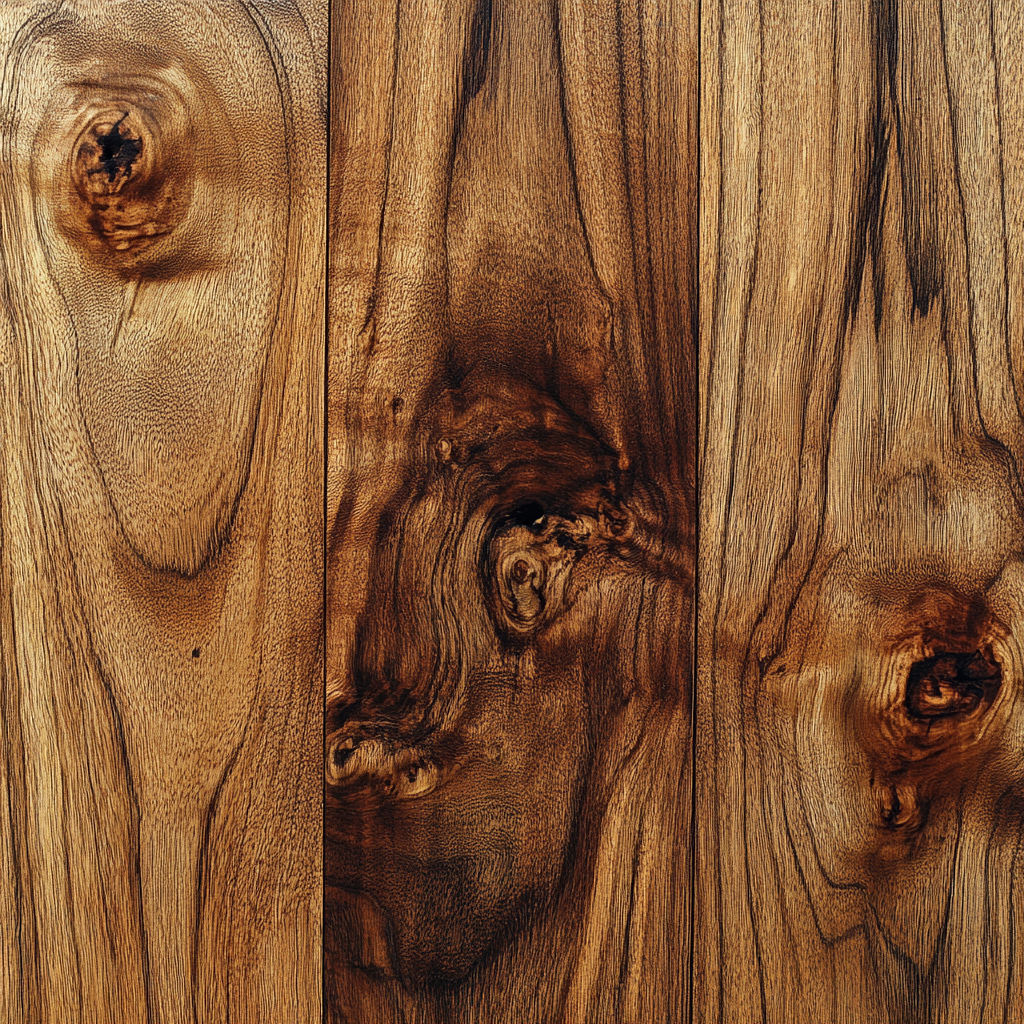
Solid wood is the most expensive choice when it comes to selecting wooden materials. Of course, there are cheaper softwoods, such as pine, but they come with many poor characteristics and are not well-suited for furniture production. High-quality woods like oak and beech are among the most commonly used in furniture production, but they are also considerably more expensive. From there, the price only goes up with options like cherry, walnut, teak, rosewood, exotic African and Australian woods, and the final cost can take your breath away.
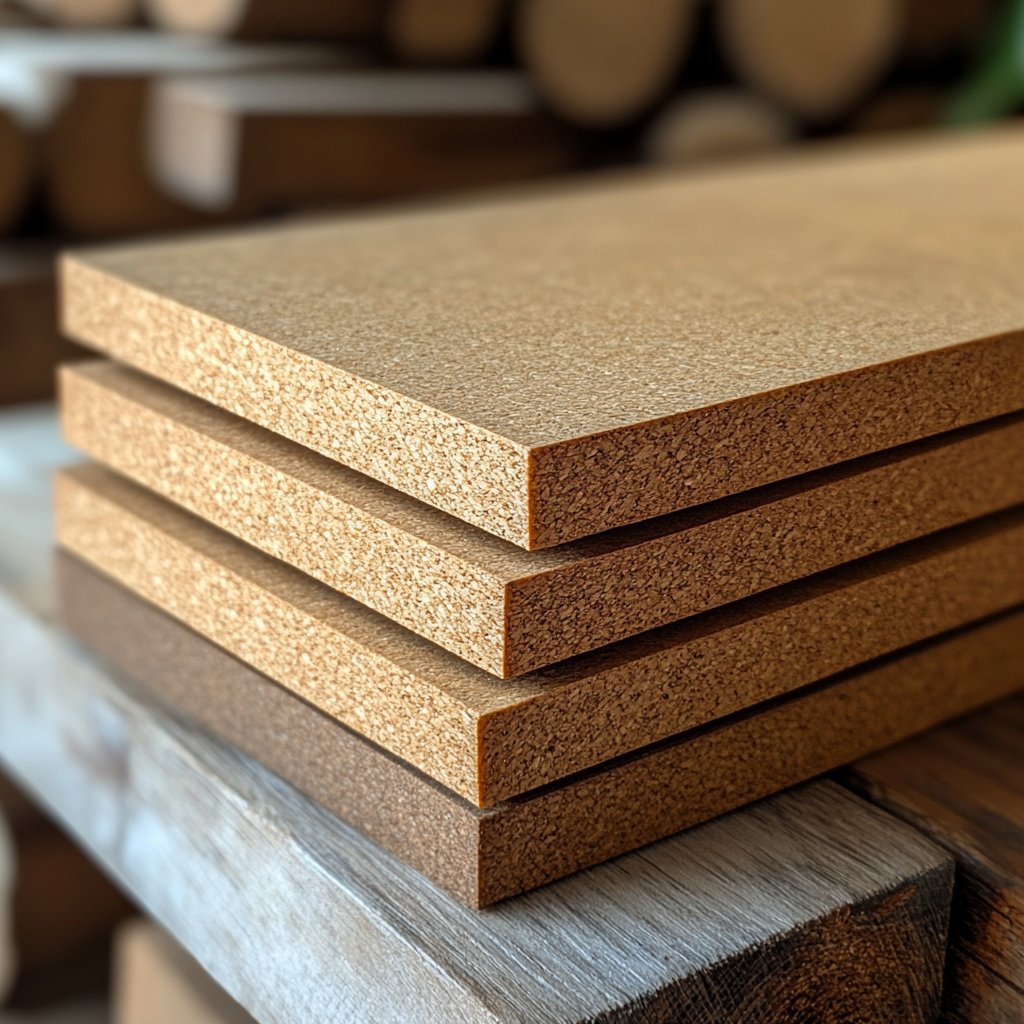
Medium-density fiberboard (MDF) is a processed wooden product that is created by breaking down wood into fibers. These fibers are then mixed with adhesives and resins before being formed into panels under high temperature and pressure. MDF is a relatively expensive and versatile material that is widely used in the furniture industry.
Particle board, or pressed wood, is produced in a similar way to MDF panels. The main difference is that the wood particles used in the pressing machines are much coarser, leaving more air pockets and resulting in boards that are not as dense or strong. Interestingly, particle board is not only lighter but also more impact-resistant than MDF due to the harder outer layer of the boards.
In terms of cost, the materials are arranged in ascending order from most expensive to least expensive: Solid wood > MDF > Particle board.
The arrangement of the fibers in MDF and particle board is similar in strength, processing capabilities, and moisture resistance. However, the price of different pressed products is largely determined by the type of finish used, and there are many options available. The primary finishes for MDF are veneer and paint, while laminated coating is used for particle board.
Veneer involves the application of a thin layer of high-quality natural wood on top of an MDF board. This process dramatically increases the final price, but gives the appearance of expensive natural wood. The ability to play with the fladers (wood grain) provides almost unlimited possibilities for creating an original look.
Painting involves priming, painting, and lacquering the raw MDF board. Possible finishes include gloss, matte, and satin (different percentages of matte and gloss), while the color options are practically limitless. Painted MDF provides a dense, homogeneous appearance, and the material itself allows for milling (unlike particle board), which provides the option of milling handles without the need to mount a handle from another material.
Laminating involves the use of new technologies to create practically artificial decors that so closely resemble real wood that people simply don’t notice the difference, except when materials are compared side by side. In fact, most of the “wood” found in our homes in the form of furniture and interior doors is actually not made of wood at all. Although they may have a slightly inferior appearance, sometimes they are more resistant to impact, chemicals, scratching or moisture.
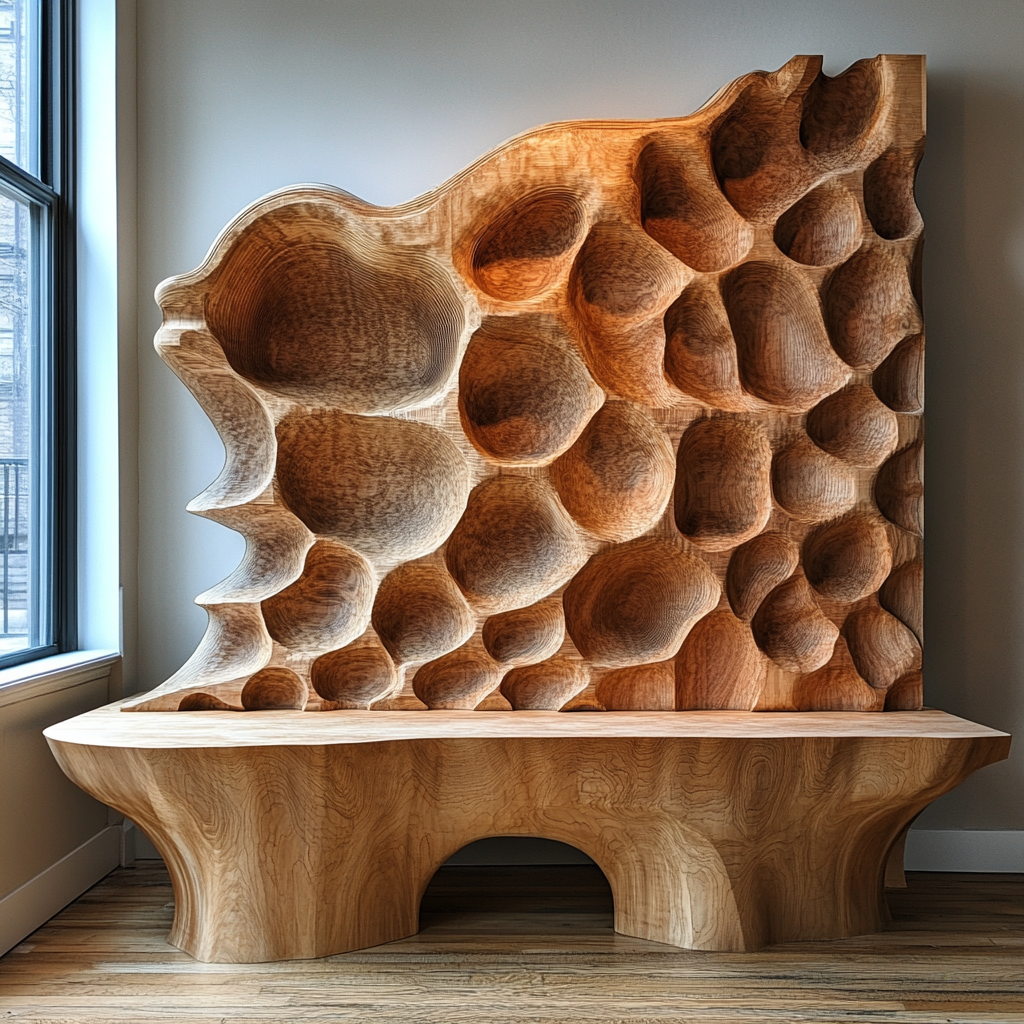
But what should we choose after all? The simplest answer is according to the technical need.
Due to the option of veneering, solid wood is usually used only where it is technically necessary – as legs on furniture where there is a high mechanical load and another material would not withstand it. Solid wood is also sometimes preferred for making furniture in wet rooms such as bathrooms because it is more resistant to moisture when well-treated. Of course, there are exceptions.
MDF is the preferred choice (compared to particleboard) for furniture or furniture components with higher usage intensity. For example, it makes more sense to use MDF for the doors of kitchen cabinets, as they are used daily and also serve as the primary visual element of the furniture. By the same logic, you can use particleboard for the carcasses – they are not as heavily loaded and are not visible for most of the time.
If you are planning a temporary kitchen that is not heavily used, you can safely rely entirely on particleboard. This will save you a certain amount of money without the need for serious concerns about the durability of the kitchen.
Regarding appearance, veneer and paint are used where you do not want to compromise on the visual aspect. If your priority is budget, there are excellent laminated surfaces that will get the job done, except for curved furniture, where particleboard is not an option.
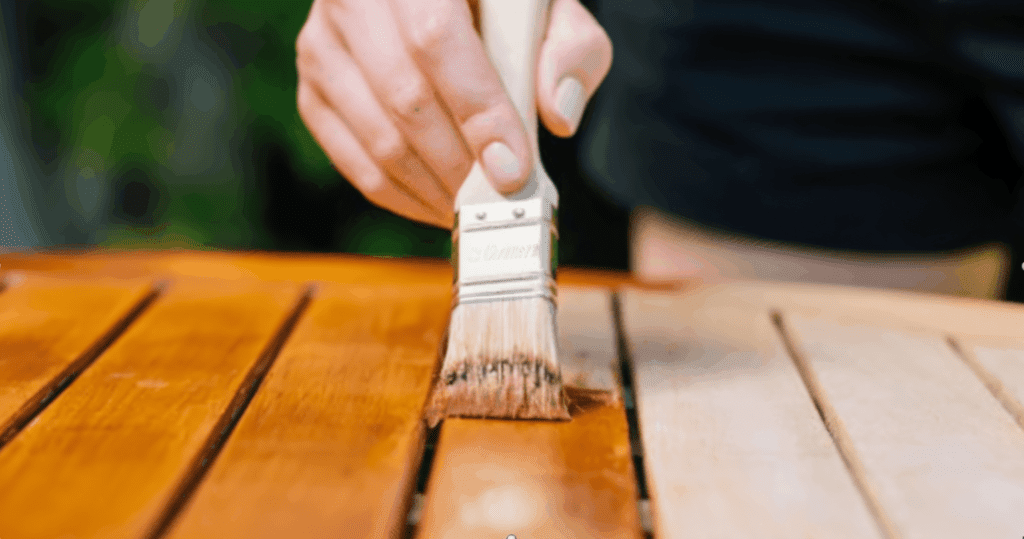
The choice of flooring and the dilemma between oil and lacquer.
Natural hardwood flooring is one of the most desirable options for a floor covering, as it adds warmth, character, and a natural touch to any room. Our primary recommendation for choosing hardwood flooring is to not skimp on price. Instead, trust in established market brands such as Bauwerk and Barlinek. While these options may be more expensive, there are often promotions available for certain products, and you may end up with a better quality product for a price comparable to a lesser-known manufacturer.
Of course, there is always the possibility of finding a quality option from a less established manufacturer. However, if you don’t have the luck of finding a reliable brand, you may find yourself with limited options after your newly purchased product turns to be compromised, all of which are either expensive or unsatisfactory. Natural hardwood flooring is not a cheap investment, and if you’re looking to cut costs, we advise considering laminate flooring alternatives.
There are two types of natural hardwood flooring: solid and engineered.
Solid hardwood flooring is made from whole pieces of wood, as the name suggests. This classic option has a reputation as the best product available. With good maintenance, solid hardwood flooring can last a lifetime and withstand numerous cycles of refinishing (a restorative process that removes 1-2mm of the wood’s upper layer, eliminating defects accumulated over time). Solid hardwood flooring is generally more expensive due to the higher cost of materials.
Engineered hardwood flooring (which has different technologies available, but we’ll discuss the most common type here) consists of a solid wood veneer layer of the chosen decorative wood glued onto a plywood base. The thickness of the veneer layer is crucial because it determines the number of times the floor can be refinished before needing to be replaced (usually 3-4 times). At this point, you might be thinking that if you have the choice, you would go with solid hardwood flooring. However, there’s a catch. Engineered hardwood flooring has a significant advantage in terms of moisture and water resistance. The different layers of plywood and the surface wood veneer are arranged so that each layer’s grains run in the opposite direction to the previous layer’s grains. This creates a construction that’s much more resistant to warping, a natural process that occurs when wood comes into serious contact with water. In summary, if your floor is exposed to flooding (a neighbor’s burst pipe, spilled and uncleaned liquid, or a forgotten window during a storm), the damage to engineered hardwood flooring would be less severe. If you keep in mind the fact, that the process of refinishing floors is so labor-intensive and costly, and involving the movement of all the furniture out of the home, you will reach the rightful conclusion, that for most cases a floor refinishing only happens once every 10-15-20 years. So, think about it – which is more likely? Refinishing your floors or experiencing a flood.
After choosing the appropriate flooring for you, it is important to also consider its finish. Most products come with a factory-applied finish, either a lacquer or oil.
Lacquer is a classic, time-tested solution. There are many different types of lacquer bases, each with different characteristics, but when chosen correctly based on the situation, the advantages are as follows:
The main disadvantage of lacquer is that it is made of quite toxic chemicals and seals the wood. Although the lacquer becomes safe after drying, the thought alone prompts people to look for alternatives.
Oil is a relatively new, highly promoted alternative. Oil is considered a natural product made from a combination of waxes and resins. Unlike lacquer, it is not toxic. In fact, most new products on the market are treated with oil, and here are the advantages:
Unlike lacquer, the protective layer of oil disappears over time, especially if cleaned with ordinary cleaning agents. (It is strongly recommended to use specialized products instead.) This fact leads to the need for re-oiling. Sometimes, this is required once a year, while other times it can be done every 2-3 years. Unless you perform this task yourself (which carries its own risks), it can be quite expensive (the cost is calculated per square meter, and consumables must be factored in as well). Additionally, it is preferable to have no furniture present during the re-oiling process. However, this last factor is often impractical, which is why it is common practice to only move small furniture items aside, while larger items like living room sets and beds are simply pushed to the side. This means that if the furniture is moved around, it is very likely that stains will appear. Considering that wood, like most natural materials, changes color depending on its exposure to sunlight, it is very likely that stains will appear after furniture has been moved, regardless of the protective coating of the wood, if the room is exposed to direct sunlight.
In conclusion, oil is truly the better choice if you are willing to provide it with the necessary maintenance. If not, we advise you to take the risk with the toxins for the sake of peace of mind.